ASP
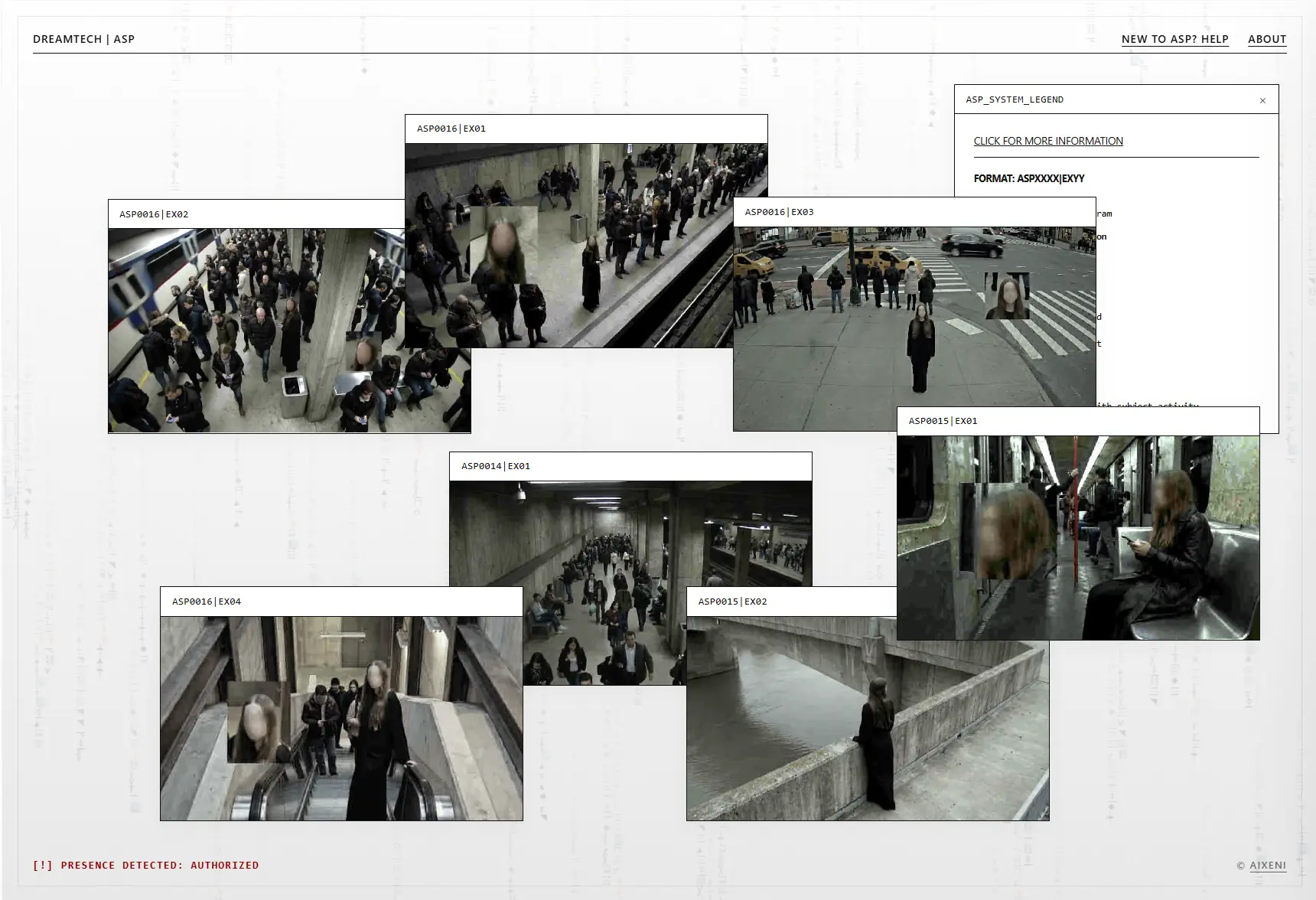
ASP (Active Surveillance Program) is an ongoing digital art project exploring the experience of feeling watched in public space.
The project originates from the tension that can arise in everyday environments such as metro stations, university corridors, waiting rooms, and other transitional spaces. These places are often ordinary and uneventful, yet they can become charged with discomfort through the awareness of being visible to others. Whether that attention is real or imagined becomes less important than the feeling it produces.
Presented through a series of static surveillance-like viewpoints, ASP constructs a fragmented archive of observations. Empty spaces dominate the work, interrupted only occasionally by the appearance of a recurring subject. These moments of presence are treated as events within a larger system of classification and observation, creating an atmosphere of anticipation in which the possibility of being seen becomes more significant than any action taking place.
Rather than focusing on surveillance technology itself, the project investigates the psychological architecture of observation. It examines how awareness, self-consciousness, and perceived attention can transform familiar environments into spaces of uncertainty. The surveillance camera functions not as a documentary device but as a visual metaphor for an internal state.
A recurring figure moves through these environments. Their identity remains ambiguous, positioned somewhere between an individual, a projection, and a stand-in for the viewer. At times the system appears to observe this figure from a distance; at others it focuses more closely, creating moments of increasing tension. As the work progresses, the distinction between observer and observed becomes less stable, raising the possibility that the act of watching may itself be reciprocated.
Each entry is catalogued using a coded archival structure, reinforcing the impression of an autonomous system continuously recording and classifying events. These codes provide no narrative explanation, instead suggesting a larger mechanism operating beyond immediate understanding. The viewer encounters fragments rather than a complete story, becoming responsible for constructing meaning from what is shown and what is absent.
Although the imagery is synthetically generated, the project is not concerned with simulating reality. Instead, it uses artificial imagery to reconstruct a psychological experience. The environments, observations, and encounters presented within ASP are not intended as documentation, but as manifestations of a state of mind shaped by visibility, anticipation, and the persistent awareness of being seen.
ASP ultimately seeks to translate a deeply personal experience into a shared visual language. Through repetition, absence, observation, and prolonged duration, the project invites viewers to inhabit a space where the boundaries between surveillance and imagination, observer and subject, certainty and projection, are never entirely clear.
SELL
OUT
SELL OUT reflects on the process through which artistic practice is transformed into a consumable and quantifiable product. While creative expression is often regarded as deeply personal, emotional, and impossible to measure, contemporary artistic production increasingly exists within structures that demand visibility, repetition, and circulation.
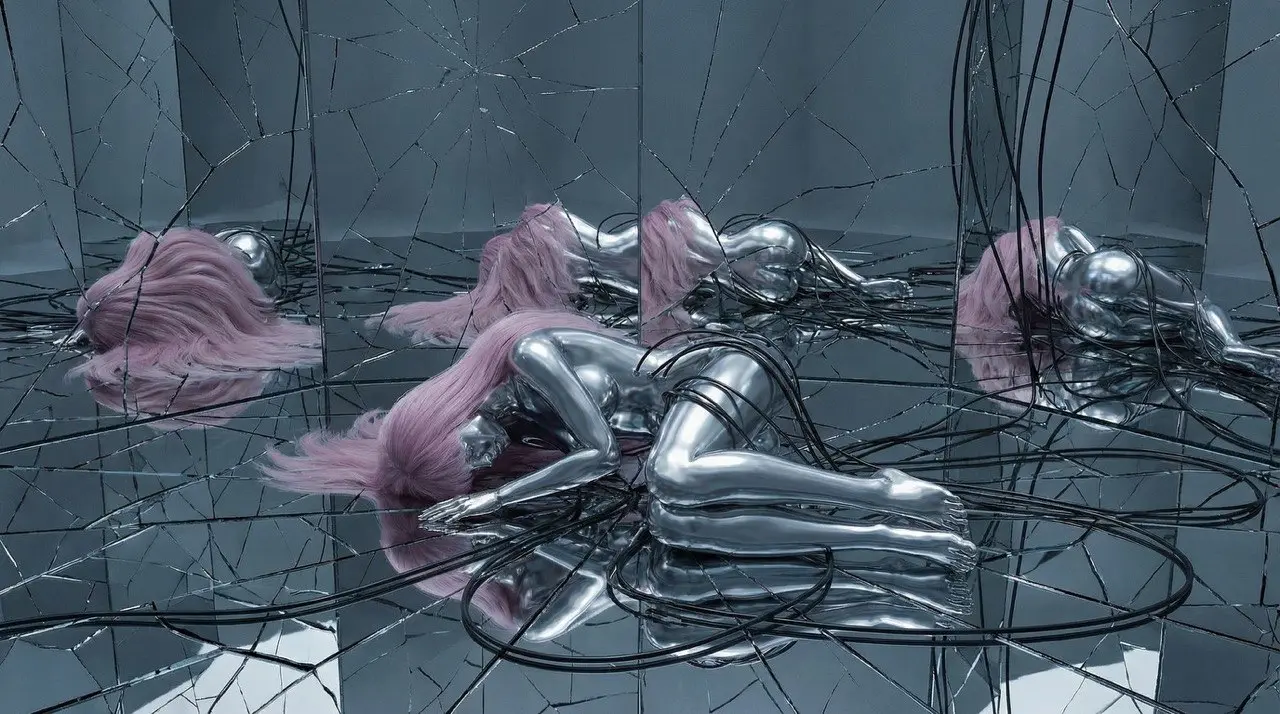
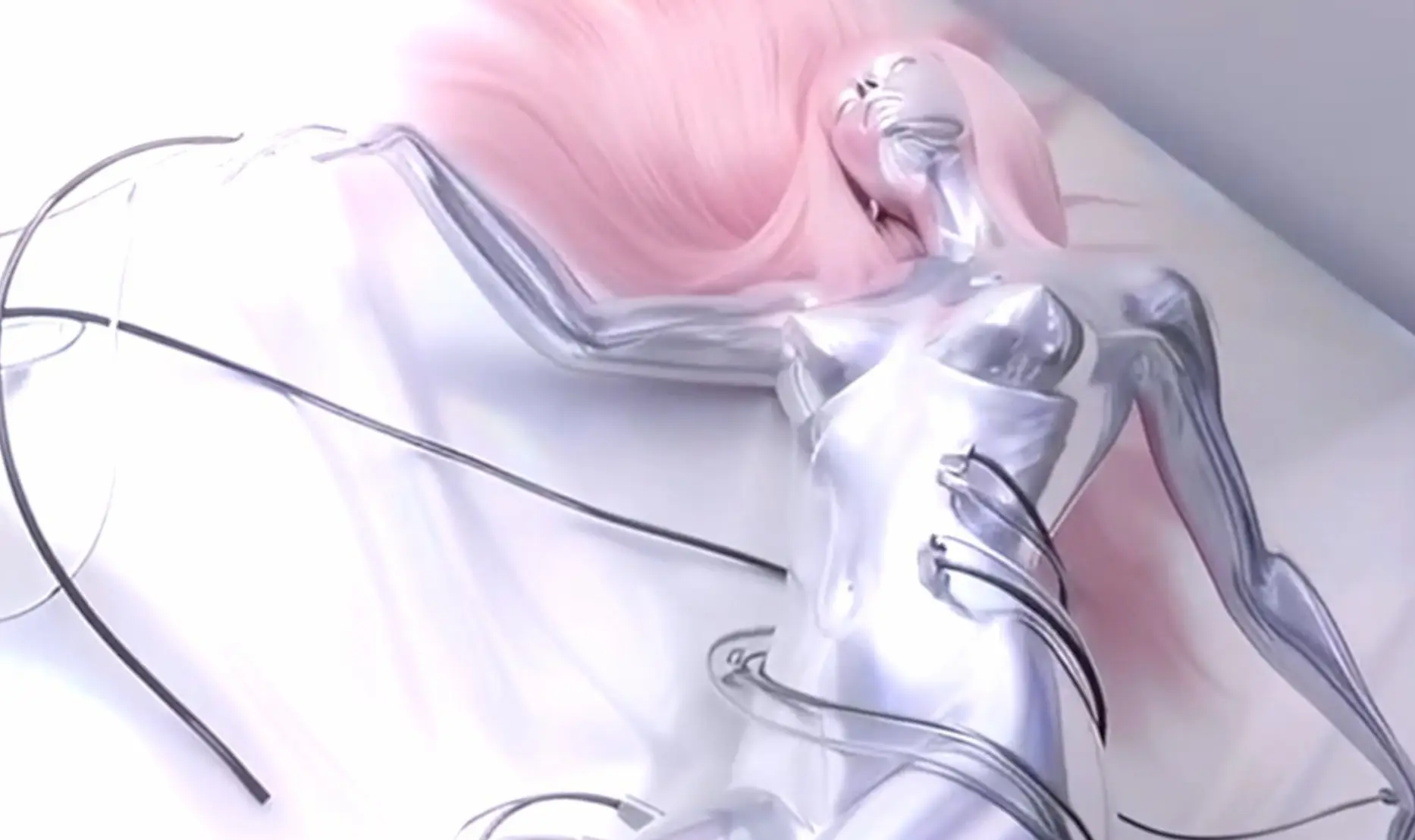
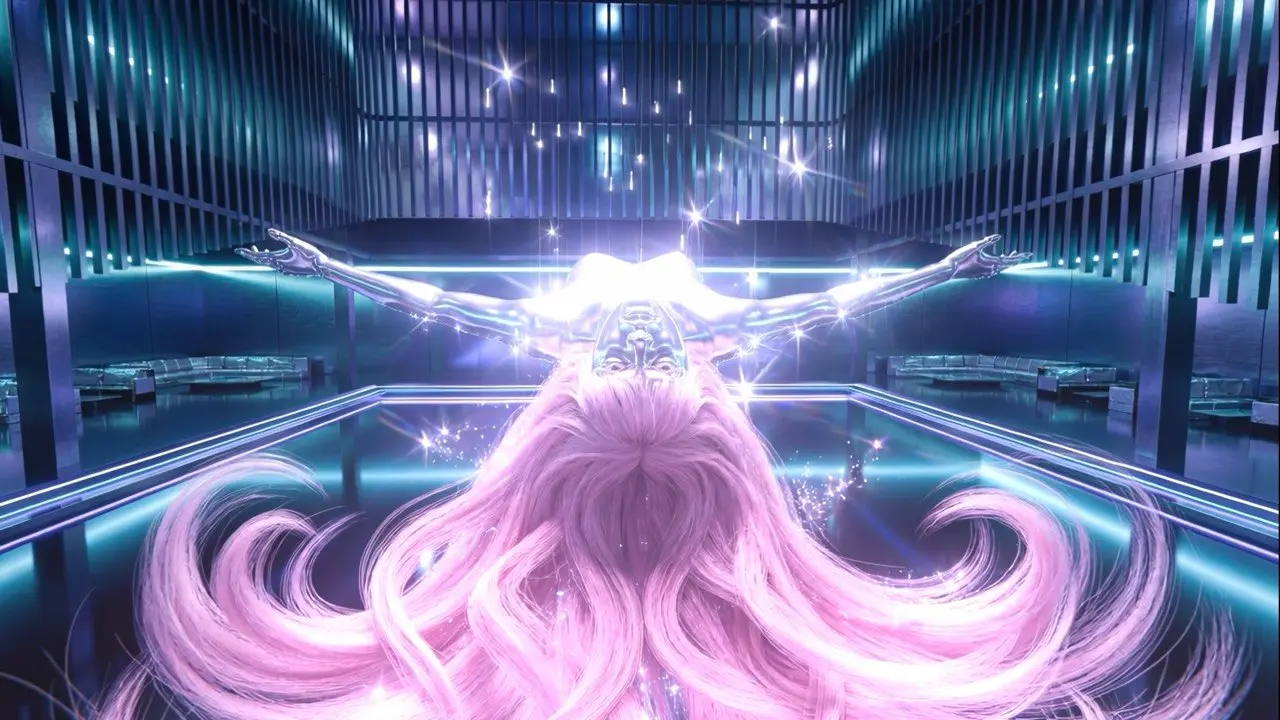
The work consists of a triptych of AI-generated videos titled RECHARGE, INSTANCE.∞, and UNIT.1. Together, they depict artistic production not as a linear narrative but as a cyclical process composed of potential, execution, and output.
RECHARGE presents the artist in a state of latent potential. A character lies within a bed-like environment, moving slightly as if charging or regenerating. This stage refers to ideas, emotions, ambitions, and desires that have not yet been externalized and therefore remain unquantified.
INSTANCE.∞ depicts the moment in which these internal states become visible. The character performs within a dark environment, surrounded by spectators and appearing almost celestial. Creativity becomes performance, and performance becomes spectacle. The infinity symbol suggests a process that is continuously repeated in order to maintain visibility.
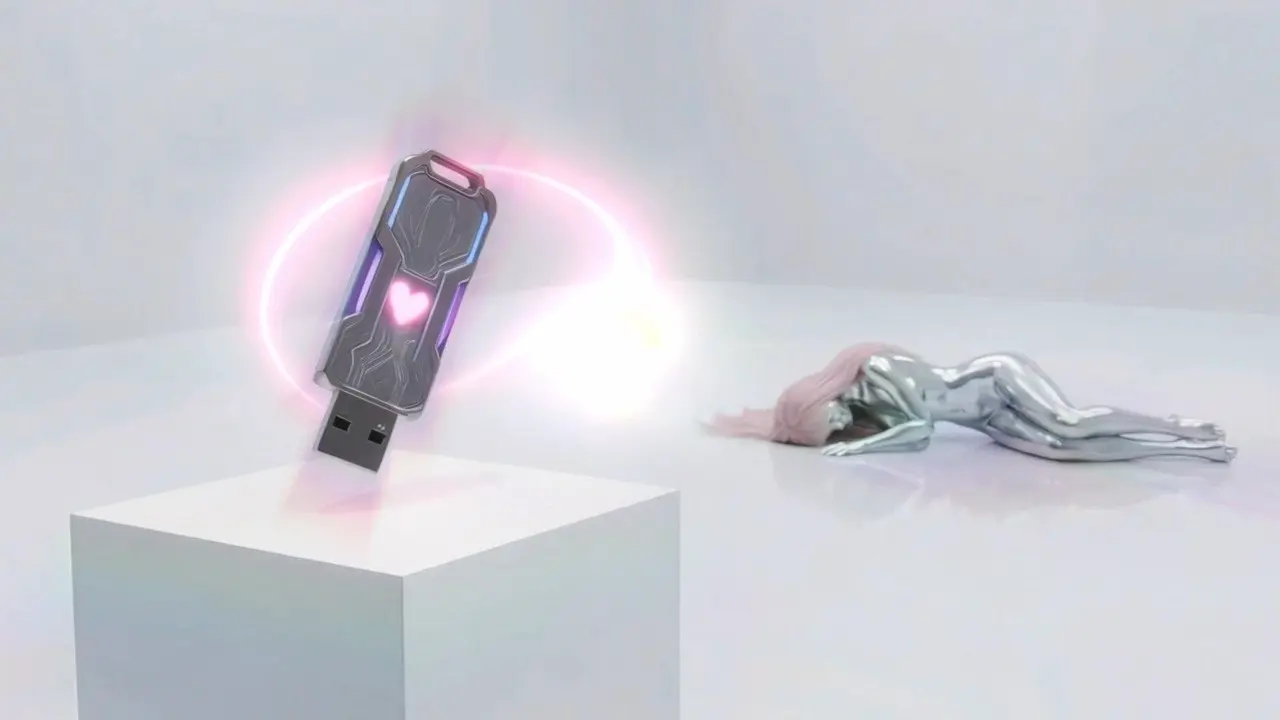
UNIT.1 presents the aftermath of execution. Within a sterile white room, a USB drive decorated with a pink heart rotates upon a pedestal while the character lies motionless in the background. Attention shifts entirely toward the object. The USB functions as a metaphor for artwork itself - something once intimate and subjective that has become tangible, reproducible, and transferable.
SELL OUT proposes that the art world often presents inherently unquantifiable experiences as quantifiable entities. Feelings, memories, aspirations, and fragments of identity become translated into objects whose value can be assessed, exchanged, and accumulated. Rather than condemning this process, the work reflects upon it as an unavoidable condition of artistic survival.
Tamwīh
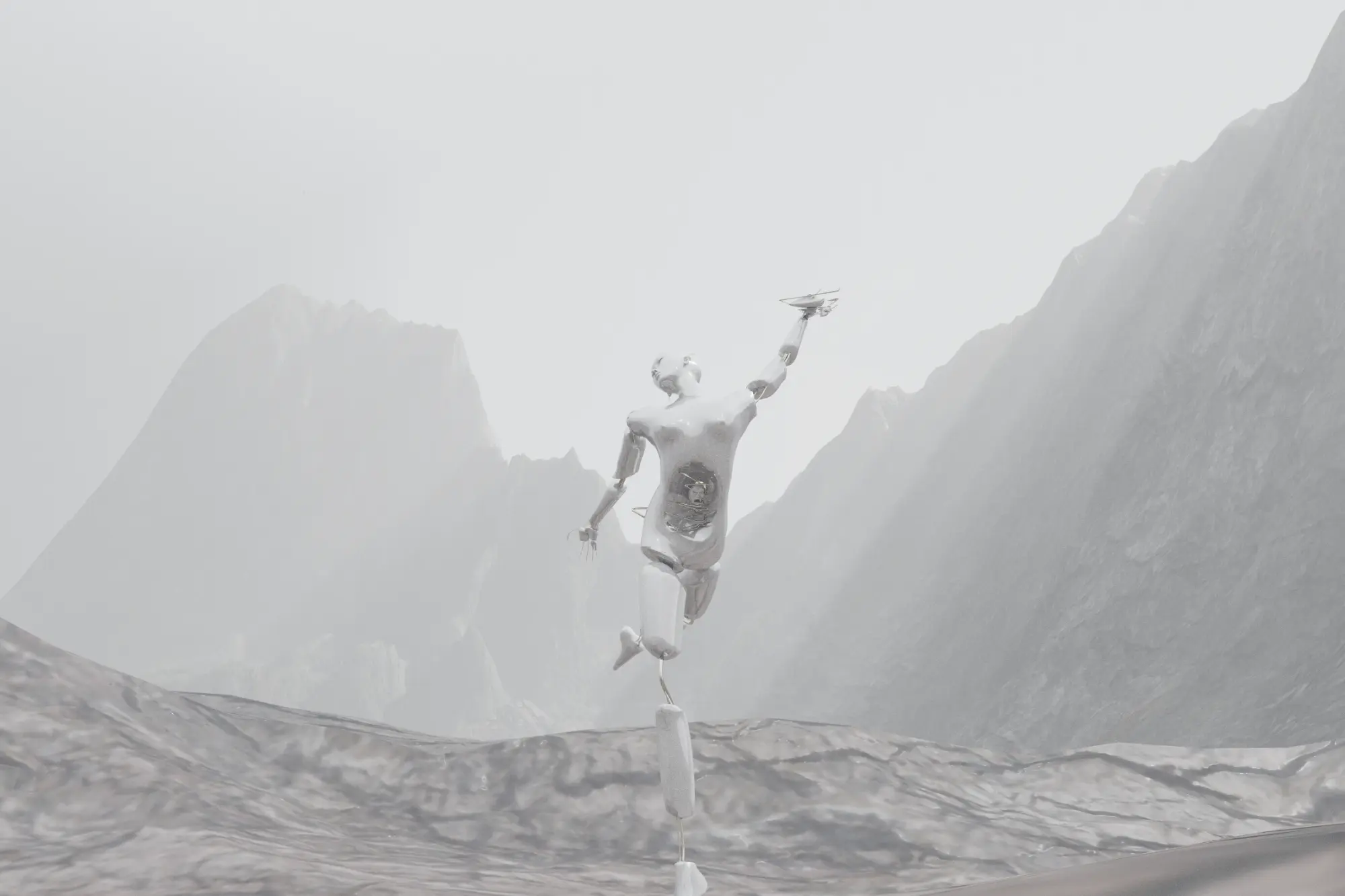
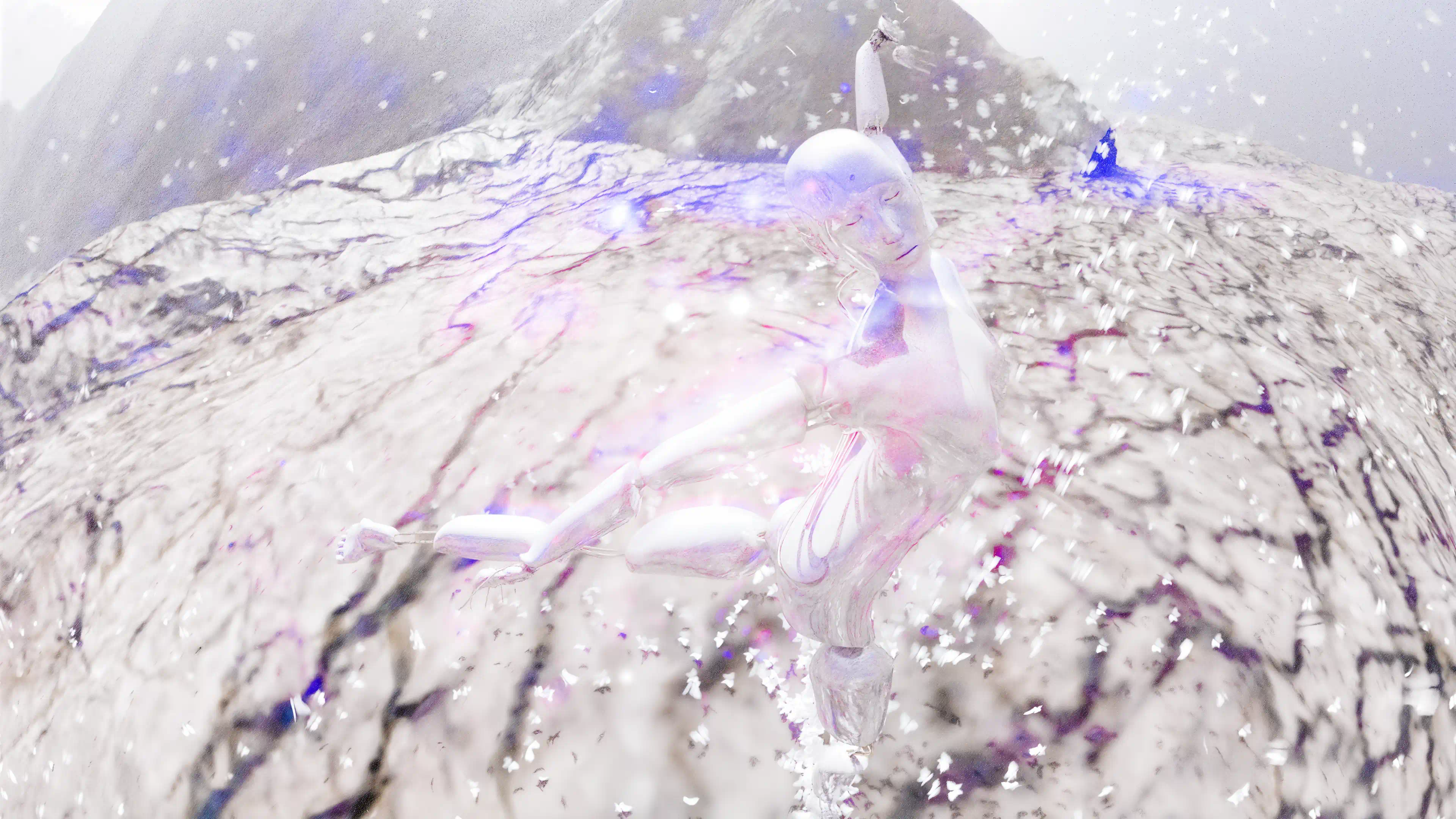
Tamwīh, named after the Arabic word for camouflage (تمويه), reflects on masking as a survival mechanism in socially hostile environments. Drawing from neurodivergent experience, the artist explores the quiet, ongoing act of concealing emotions and identity in order to pass.
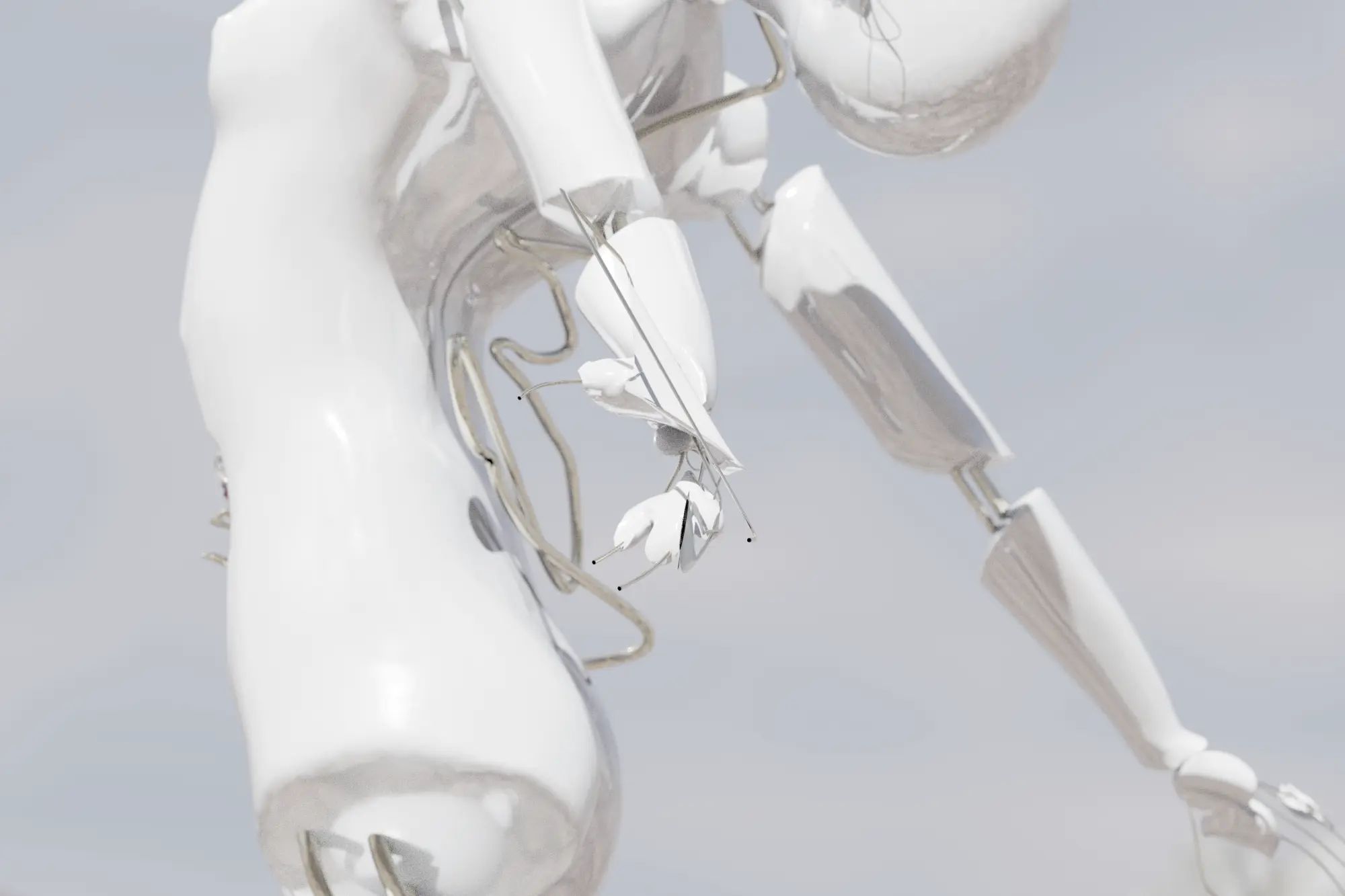
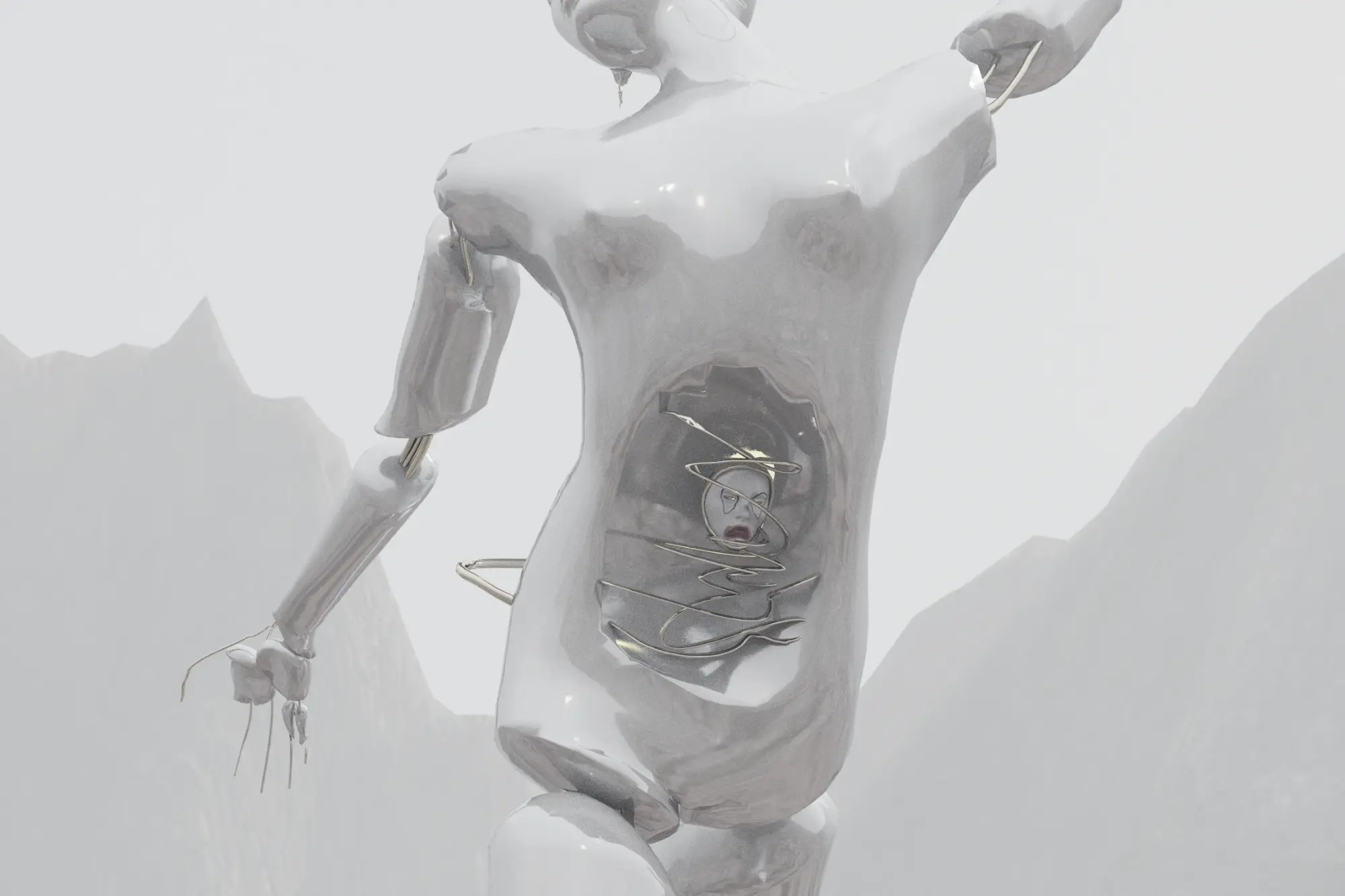
The mask is embedded in the intestines, symbolising how deeply this adaptation is wired into the body. A neutral face remains unchanged despite internal intensity. Mesh displacement, a rigging error, is left intact to mirror the subtle ruptures masking causes over time.
Tamwīh resonates through stillness and distortion, revealing the tension between being seen and staying hidden, and the cost of that negotiation.